german bullocky meeting 2026
We draft oxen people are a tiny but growing minority within the small group of European draft animal users. But the Draft Cattle Working Group has been around for about 30 years. We are a loose association of people who practice this cultural technique or are interested in it. Most of us come from Germany, but some are from Austria, Switzerland, or France. Every year, a two-day meeting takes place on a weekend in February on a farm with draft cows, oxen, or bulls.
This year, on February 14 and 15, Mirko Zimmermann and his husband David hosted nearly 40 people in Hüttenberg Reiskirchen, near Wetzlar—despite considerable resistance! A few weeks before the meeting, the Lahn-Dill district had been declared a bluetongue restriction zone (type 8), which necessitated negotiations with the veterinary office and a lot of paperwork. The irony here is that the draft suitability test was actually supposed to take place in November 2025 at the newly founded Center for Draft Cattle Research and Training and had already been postponed there for the same reason. In addition, it rained for days before the event, and the ground conditions were accordingly poor; not a good prerequisite for an outdoor event. Finally, the landlady canceled at extremely short notice, where diner and mutual presentations had been planned. Both then took place spontaneously in the Zimmermanns' barn, who also provided food and drink. Despite everything and health problems, the Zimmermanns managed to host the meeting.

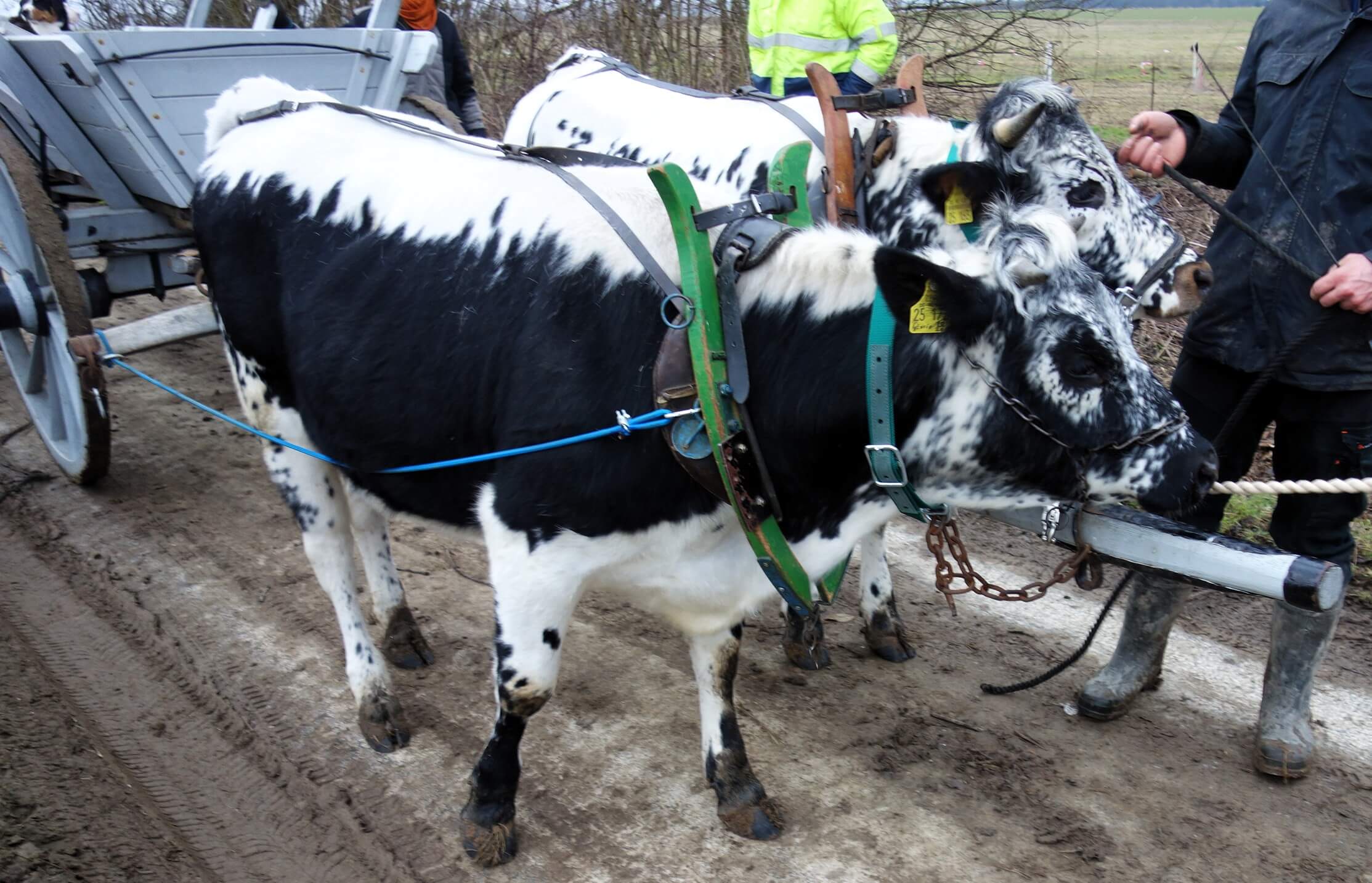
Traditionally, the hosts' animals are harnessed on both days, and sometimes there are also guest teams. On Saturday evening, after a meal together, participants present pictures or short films, reports, or lectures on their activities related to draft cattle, and sometimes there are also specialist lectures by external speakers. The most important thing is talking shop together, and many friendships have developed from these meetings!
What made this year's meeting special was the simultaneous organization of a draft cattle proficiency test! We owe this not only to Mirko and David on site, but above all to Claus Kropp, director of the Lauresham open-air laboratory. In November 2024, he organized the first aptitude test there in about 80 years. In doing so, he gave an important boost to the small but noticeable trend toward this once-important and now almost forgotten cultural technique. The goal is to hold this event every year.
The Zimmermanns managed to organize the meeting. Thank you very much for that!
The aptitude test cannot be compared to the pulling competitions in Spain or America, where the aim is to pull the heaviest possible load on a sled over a certain distance as quickly as possible. Nor can it be compared to the competitions in America, which involve various skill exercises under certain conditions and at certain speeds.
Our aptitude test is not about winners and losers. It is more of a friendly, collegial presentation of the skills of prospective or experienced draft cattle and their bullockies. It offers the opportunity to compare oneself with others. This motivates people to practice before and for the test and to stay on the ball after the test. In addition, you should receive a document for the trained animal, which identifies it as such, e.g., when selling it.
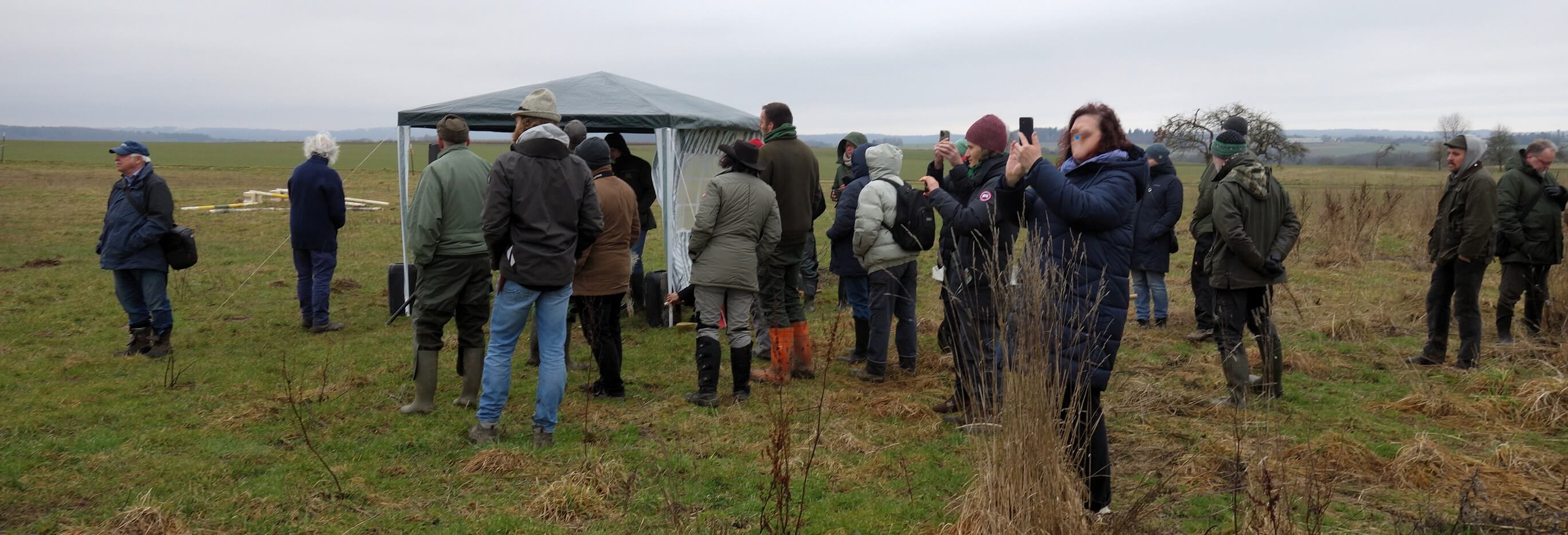
Since all five participating cattle were under two years old, the focus here was not yet on pulling strength, but primarily on the animals' trainability and schooling.
The aim was to test the basics for later work in the forest or on the field, in parades or in animal-assisted therapy, basics such as: reliable starting, stopping and standing still, turning right and left, and taking a few steps backwards. The course consisted of 5 stations:
1. A slalom course consisting of 5 cones plus start and finish
2. A gate that had to be opened, passed through, and closed again
3. A 20 cm high bar that had to be stepped over
4. An “L” made of bars that had to be passed through in order, combined with an imitation of shafts in the form of raised bars into which the animal was to be led and remained standing briefly
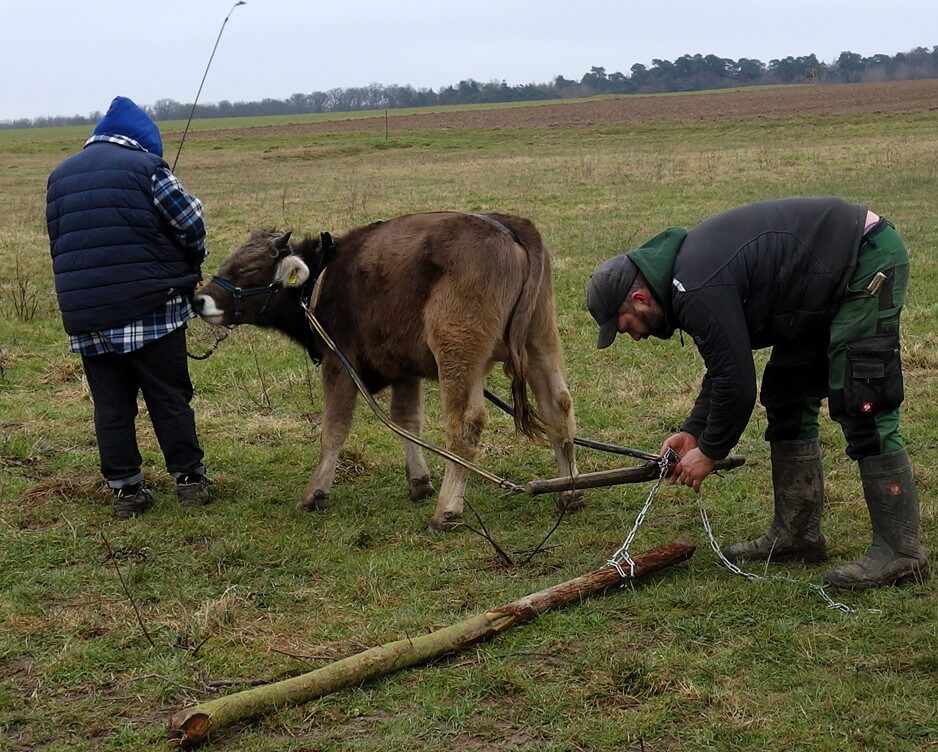
5. A tethering point where a harness is put on and taken off again
6. An encounter with a large, moving, honking tractor, during which the animal should remain manageable.
The stations required the animal to follow confidently and be directed in all directions, to stop and stand calmly, to “maneuver” and “park,” and to be harnessed in a relaxed manner.

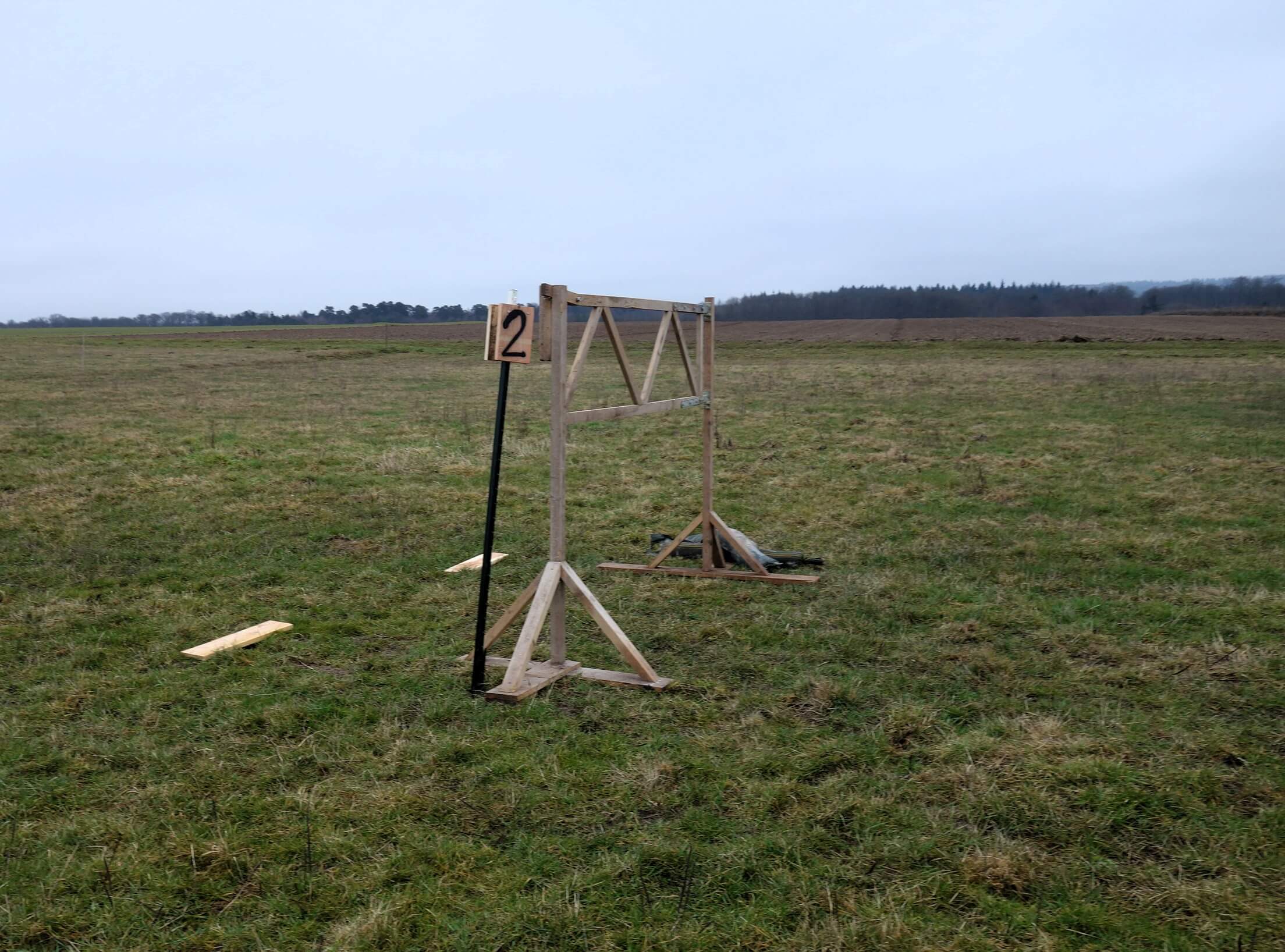
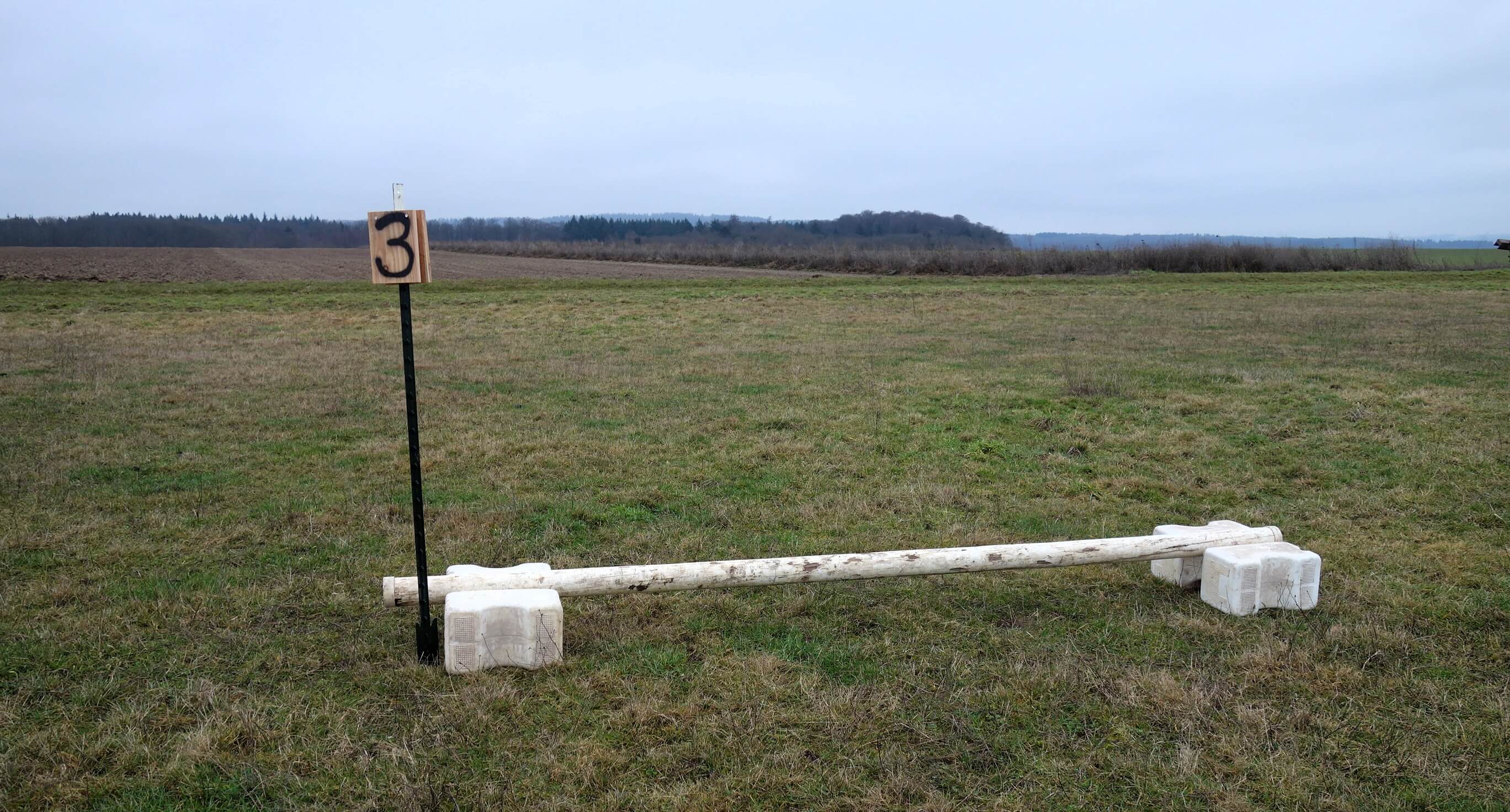


There were no specifications as to whether the animals should be led by a halter, driven from behind with reins, or directed using the North American method without bridles, using only voice, body language, and whip signals. The only important thing was that everyday situations were mastered.
The three judges were veterinarian Dr. Elke Treitinger, who also performed the health checks on the cattle, Jörg Bremond, co-founder of Zugrinder AG, and Anne Wiltafsky, an expert in cattle behavior and training, who moderated the test. All three have or have had cattle teams themselves.
Anne Wiltafsky's moderation and evaluation style clearly highlighted what was most important here: positive evaluations were given above all for good human-animal relationships, attention to animal welfare and safety, and harmonious interaction between humans and animals based on mutual trust and respect.
To cut to the chase: all five animals passed the test. However, the differences in approach—both of the animals and the humans—to the stations were interesting:
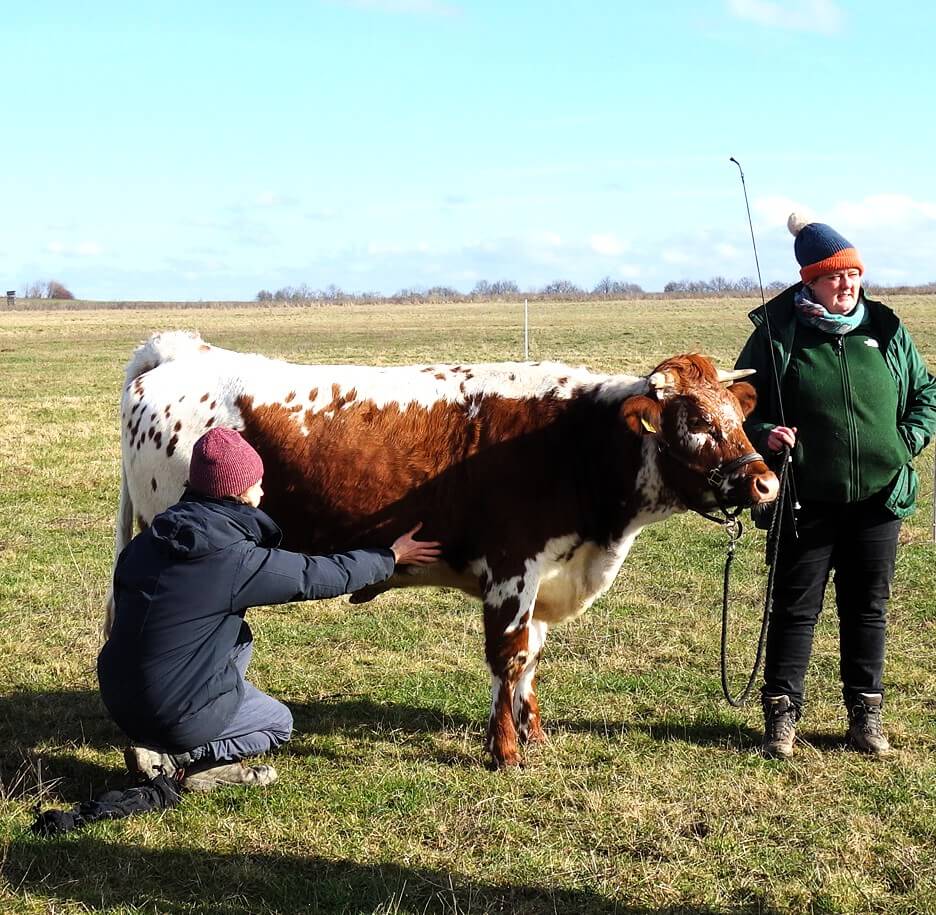
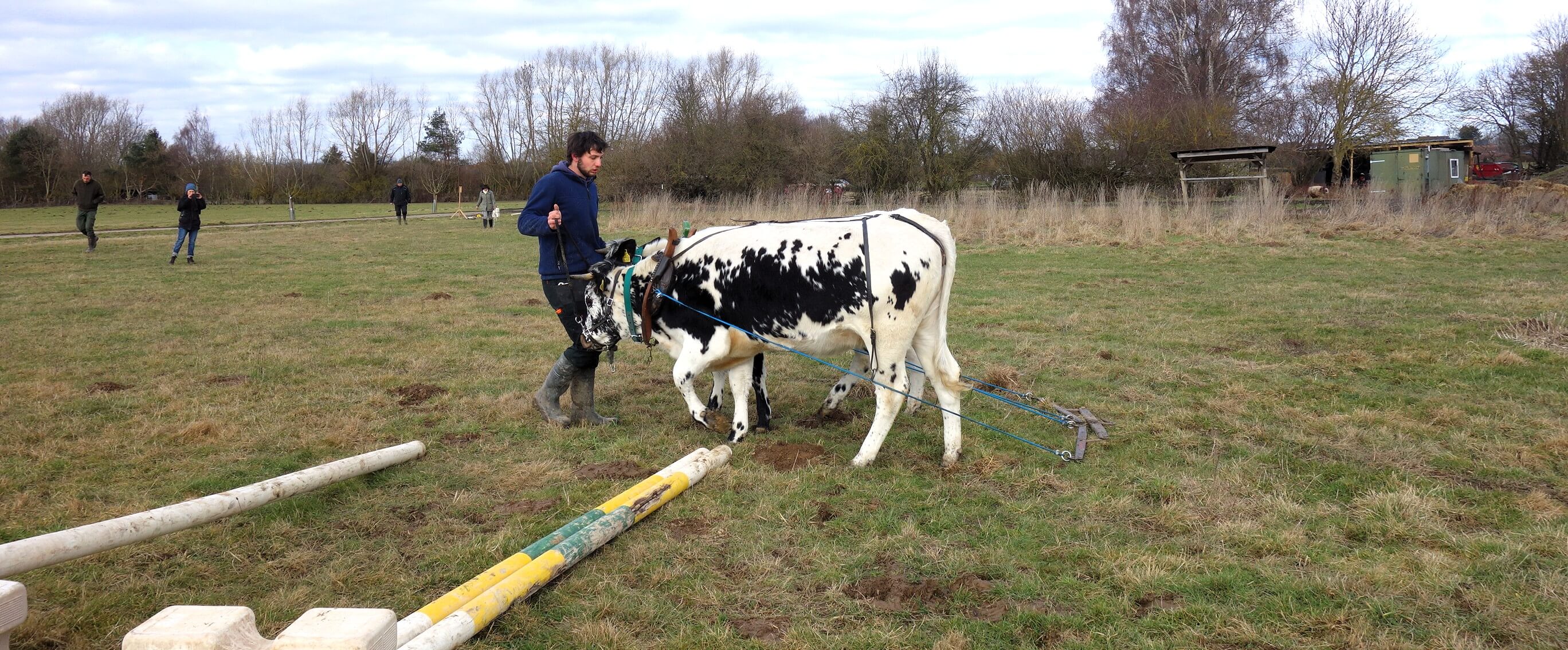
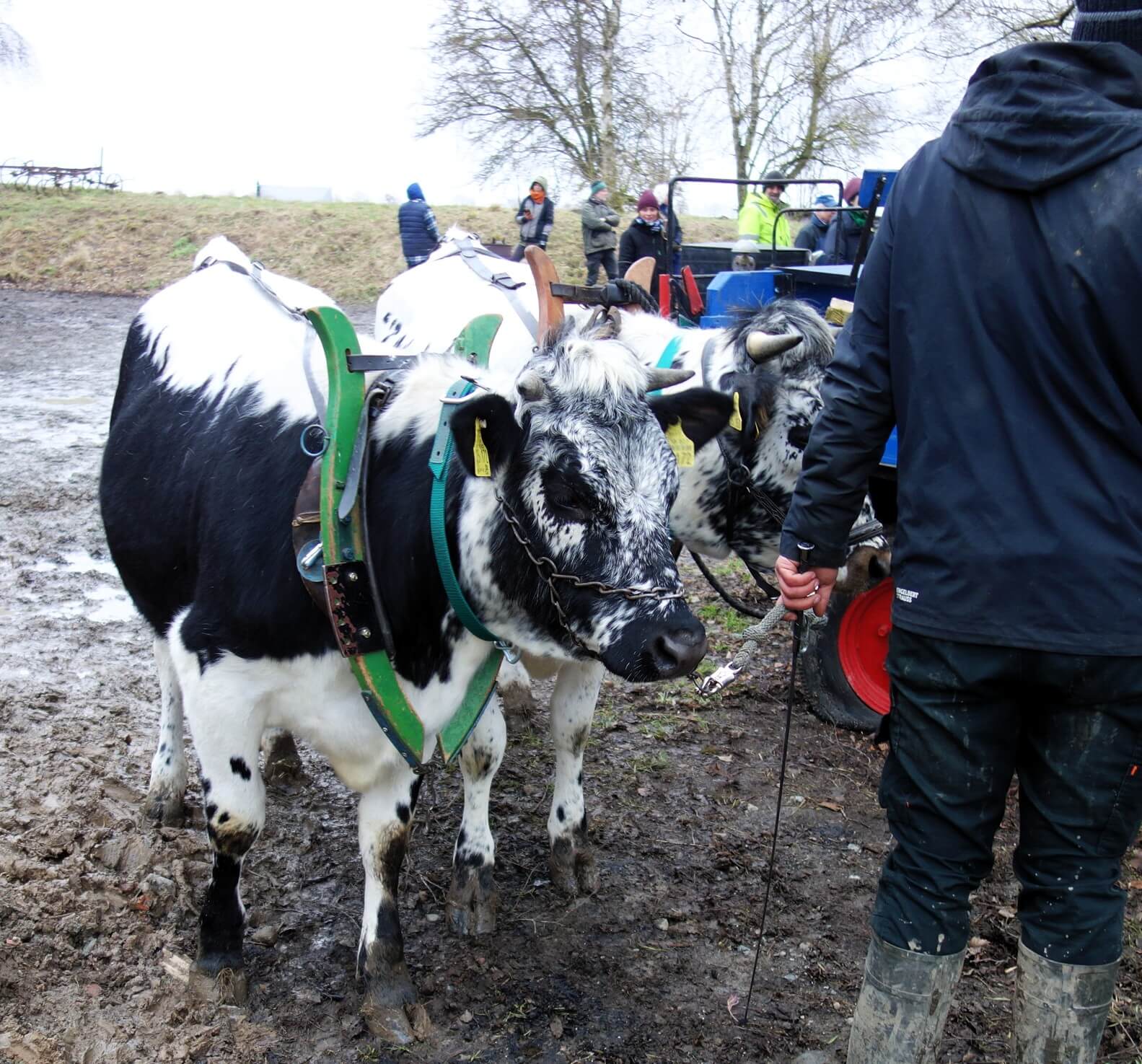
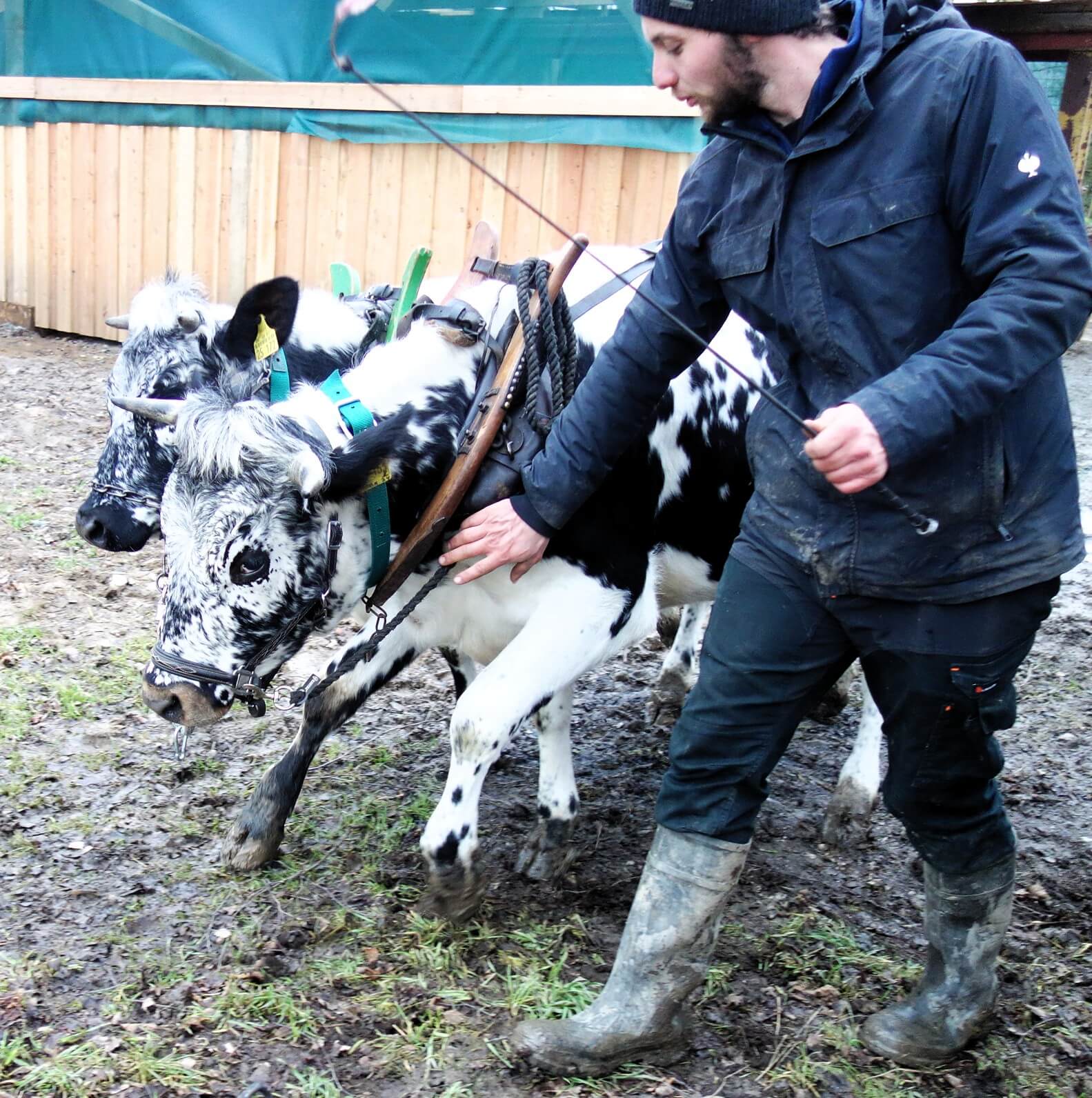
The one-and-a-half-year-old Red Highland heifer Lisa Marie clearly missed her partner, who had stayed at home and with whom she usually works. Despite her calls and visible nervousness, she followed the experienced Karl Wilhelm Becker, who expertly guided her through all the obstacles. Claus Kropp completed the course with two very relaxed one-year-old Original Allgäu Brown Vieh heifers, praising them with his voice and pats. Doc and Marty followed him trustingly and waited for the praising pats after each task. Markus Wintrich also guided two well-developed, one-and-a-half-year-old Vosges heifers through the obstacles one after the other. He had the ambition and patience to guide Onni and Biscuit through the course without a rope, at least in some sections, using only voice, body language, and whip signals, which he did very well.

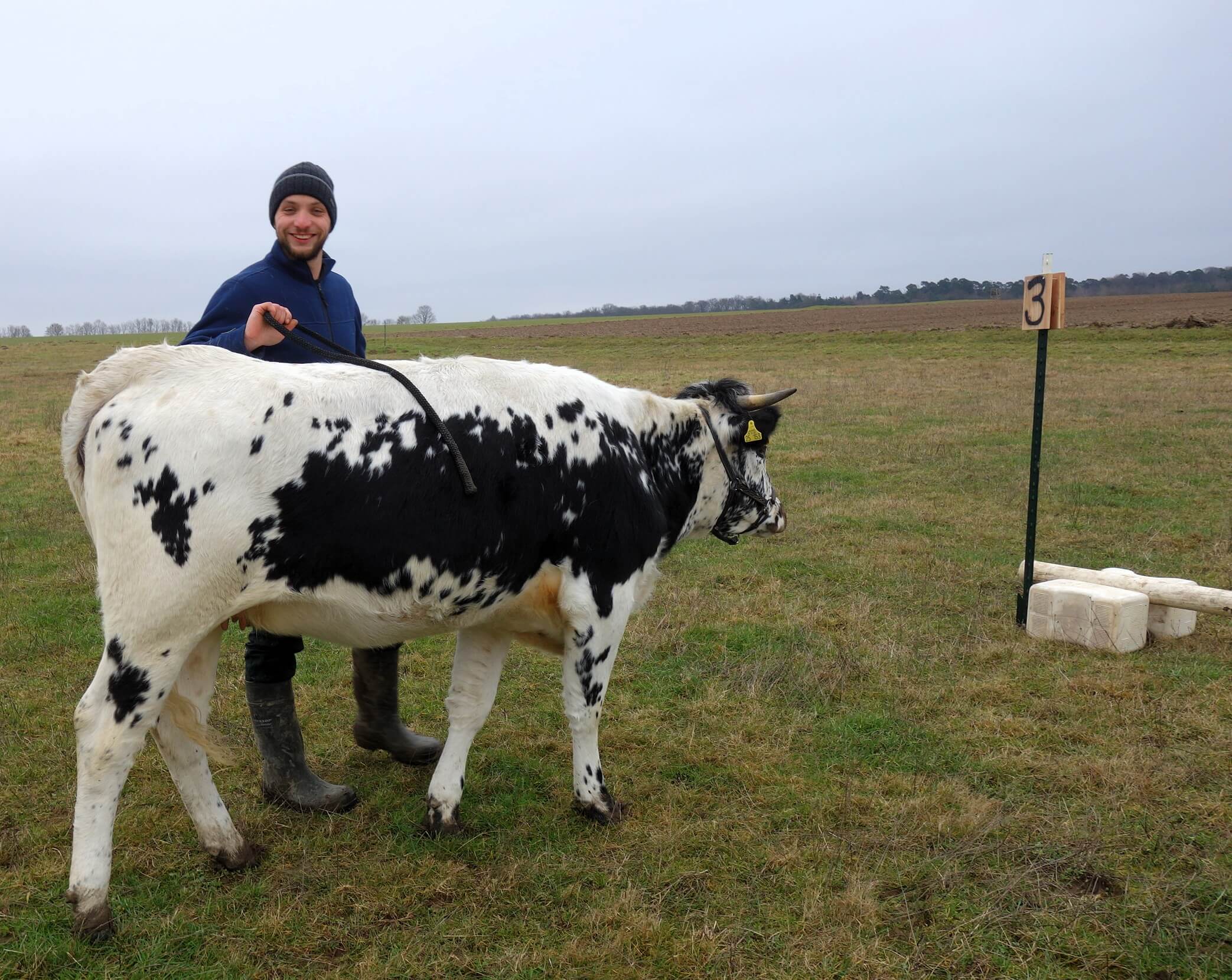
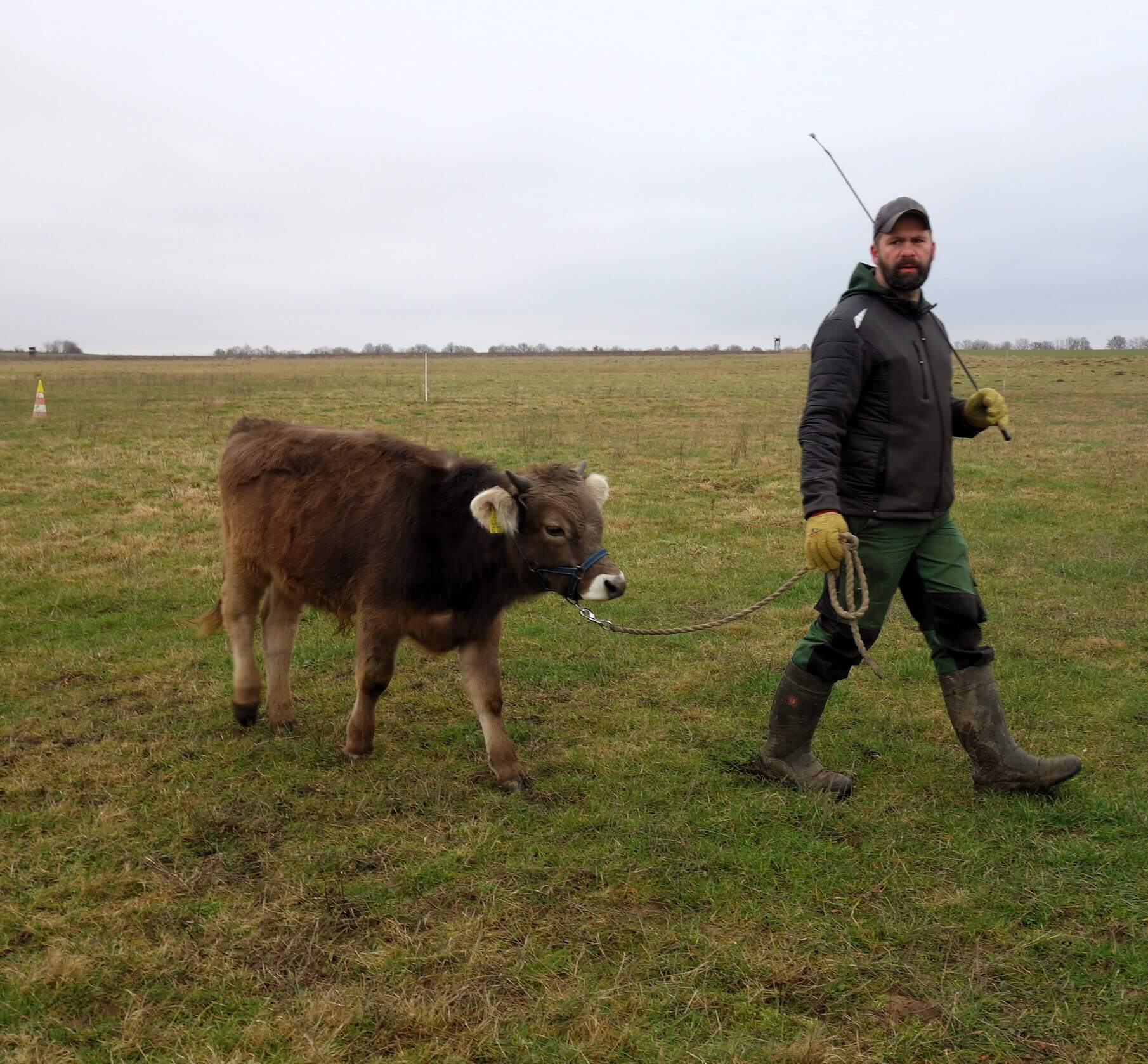
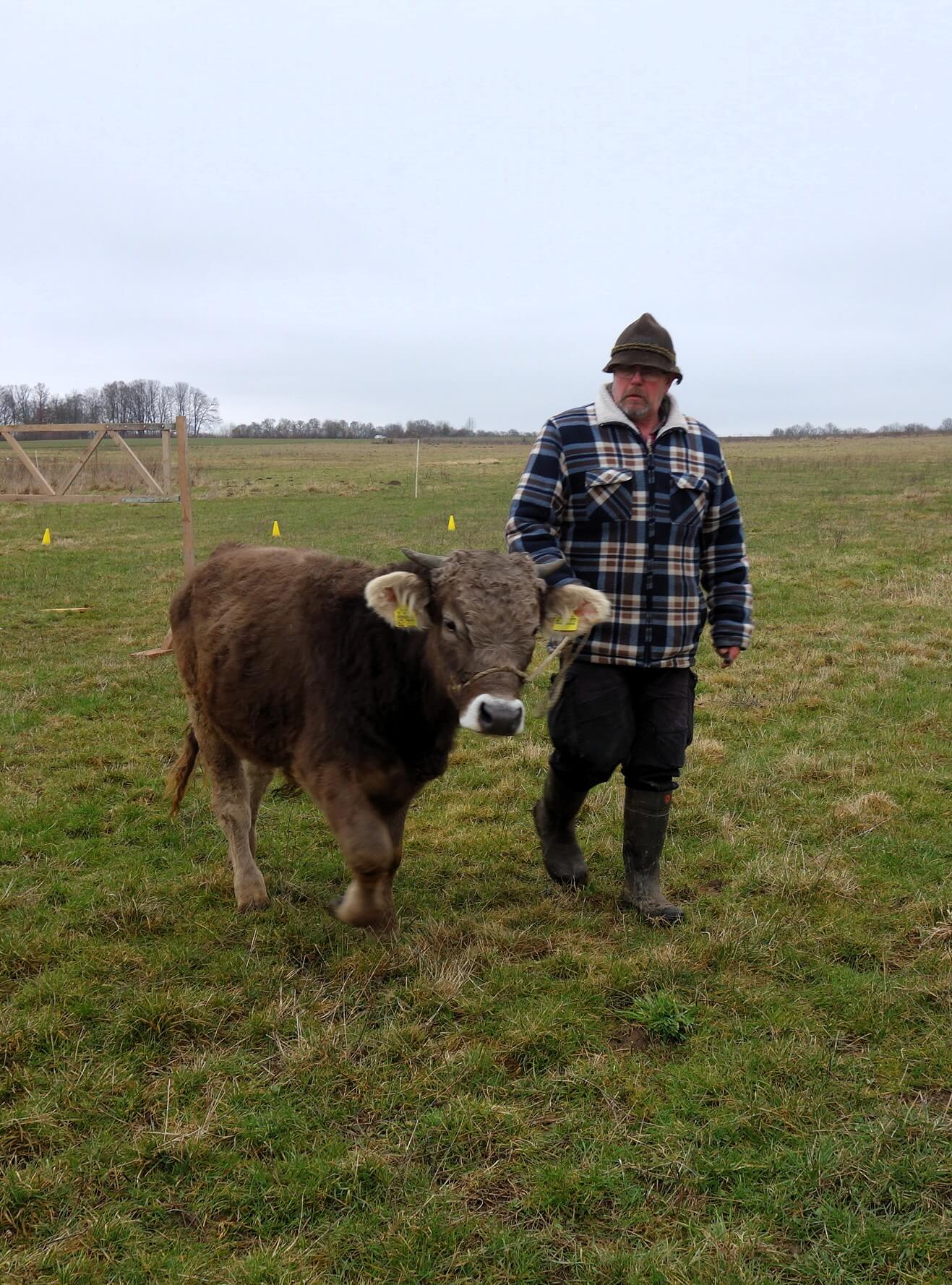
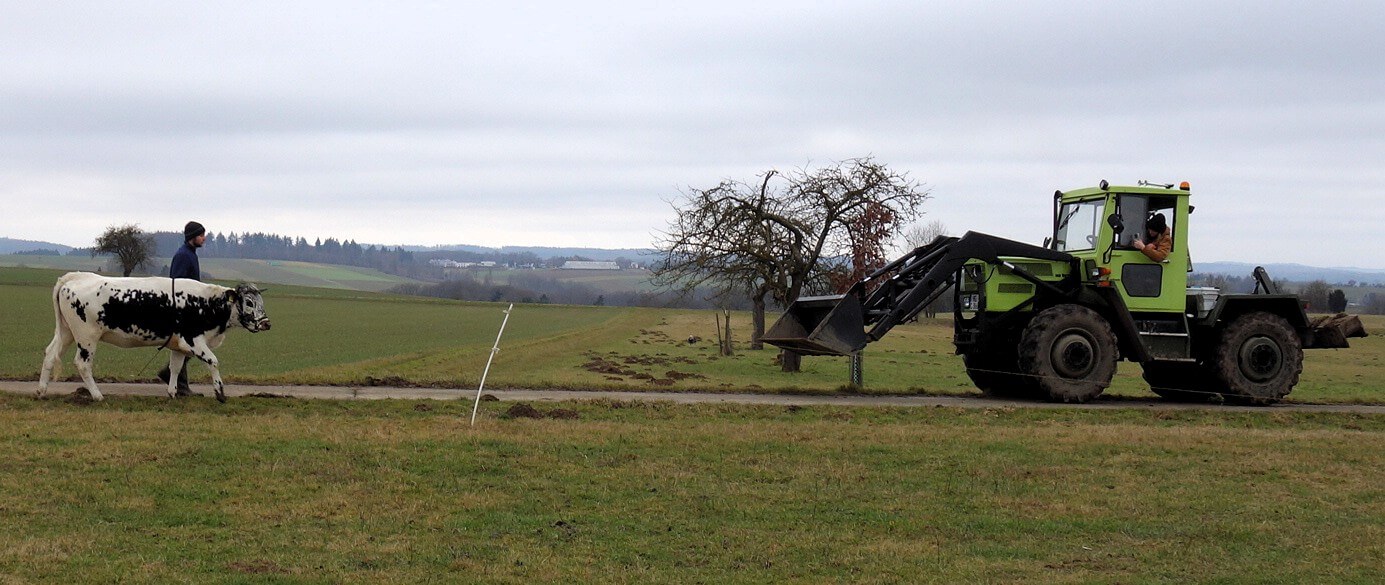

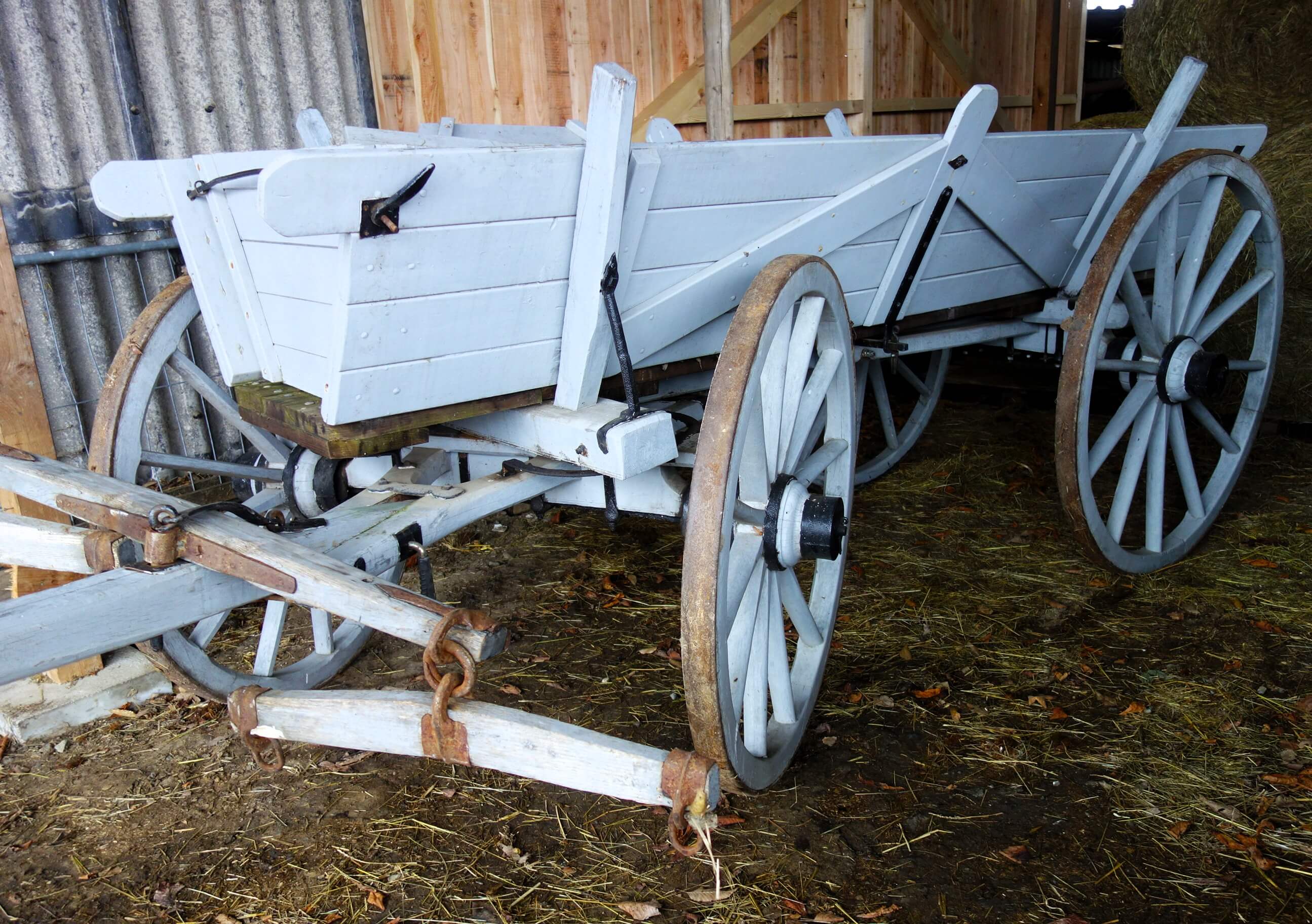
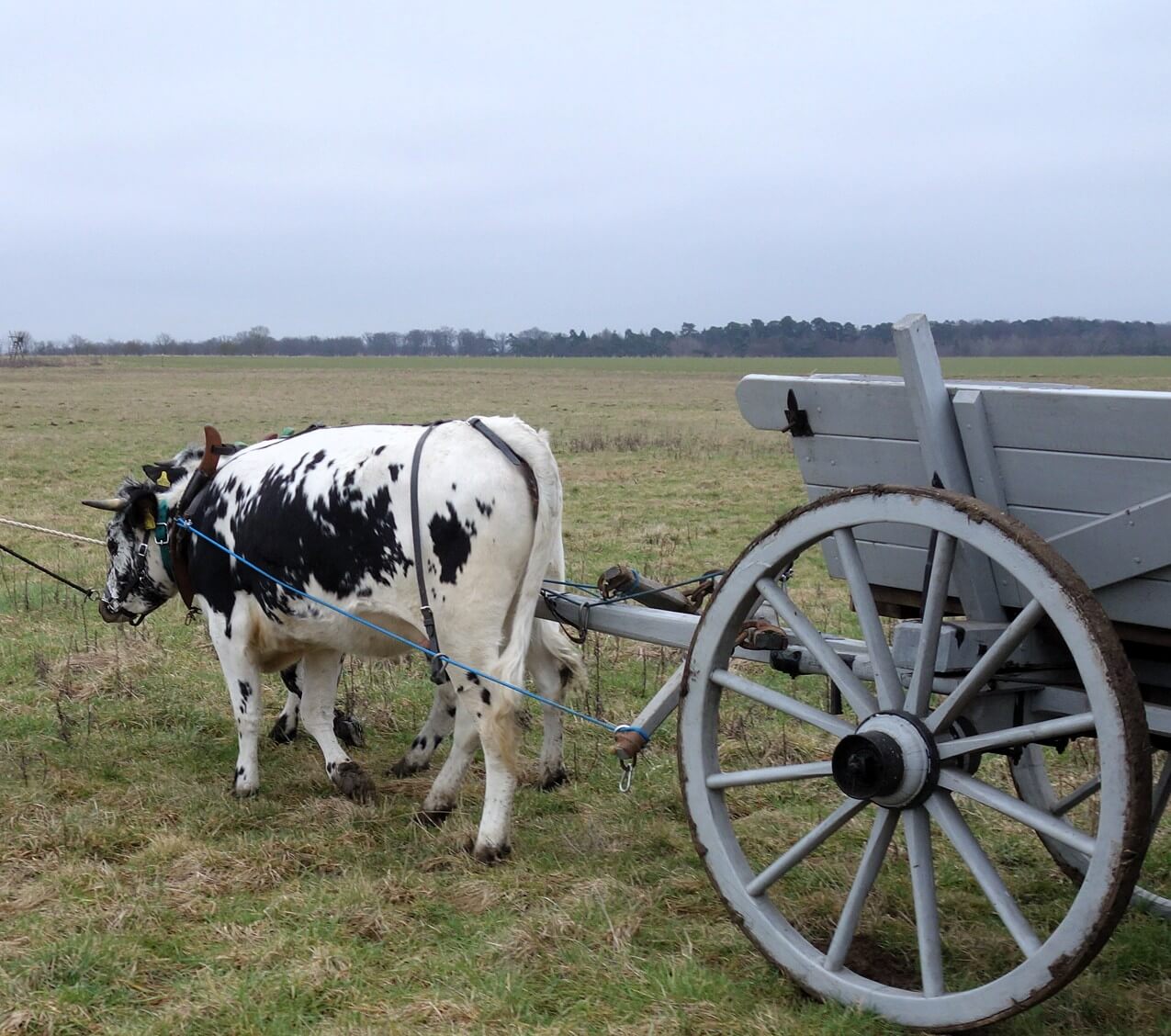
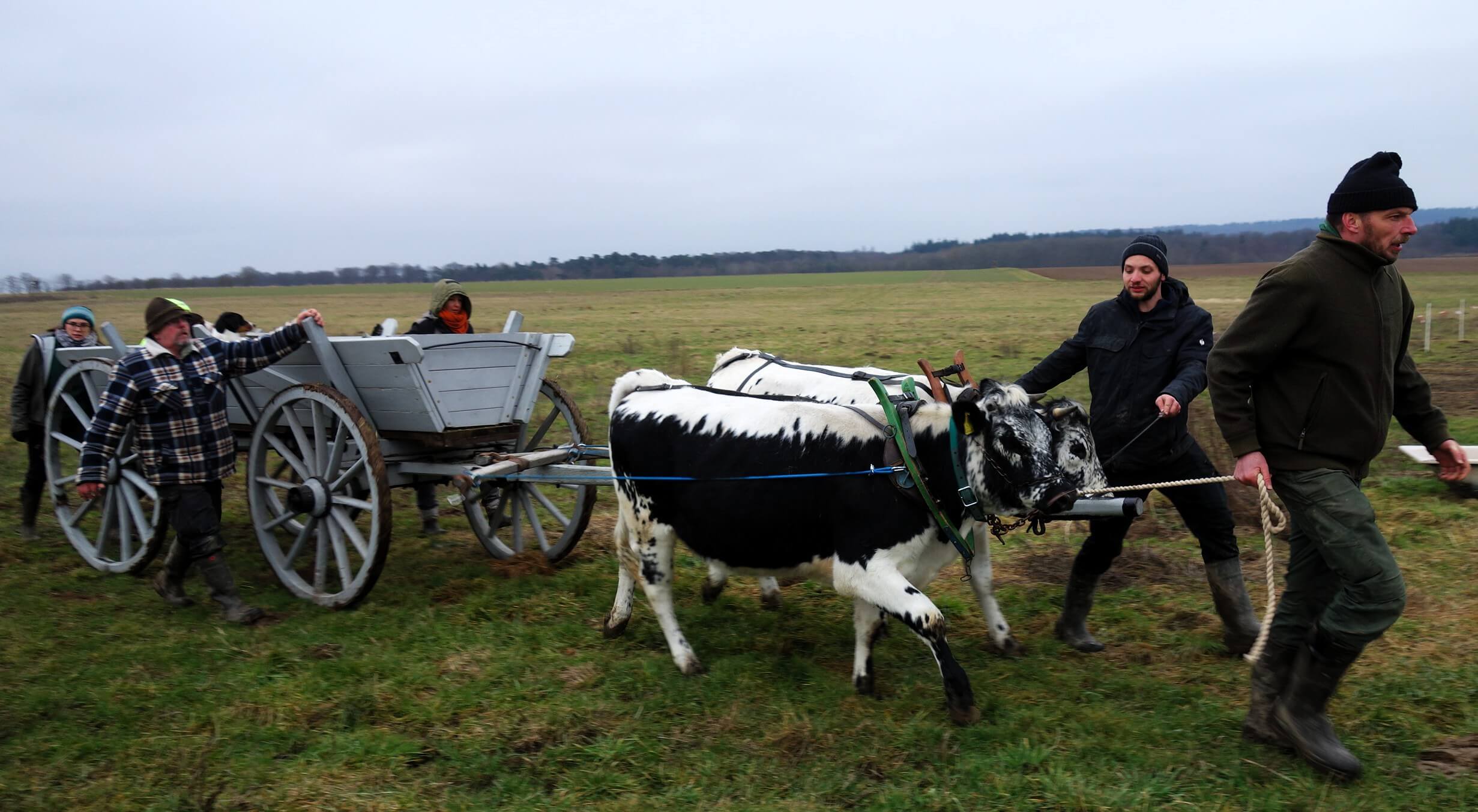
For us spectators, there was a lot to learn from observing and then plenty to talk about. Afterwards, and again the next morning, some of the young animals were harnessed to light carts.

After a dinner conjured up by Mirko and David, there were three more contributions from participants. Julia Blumenthal reported on her trip to Uganda with Anne Wiltafsky: Through contacts with Tillers International and later again at the World Draft Cattle Symposium in Lauresham, Anne had met Boniface Okumu, the head of the “Oxenclinic” in Uganda. She had arranged a draft animal workshop there and flew with Julia to northern Uganda, near Gulu. Julia showed us pictures from the trip, of her work with the cattle and the people there. Particularly impressive was the short film about the local production of American neck yokes, made only with a machete and at breakneck speed.
Many years ago, Tillers International (https://tillersinternational.org) founded the Oxenclinic together with Boniface. The cancellation of funding for international cooperation in the USA has made it even more difficult for people in the post-war region to secure support for better agriculture and self-sufficiency and to rebuild lost knowledge in this area.
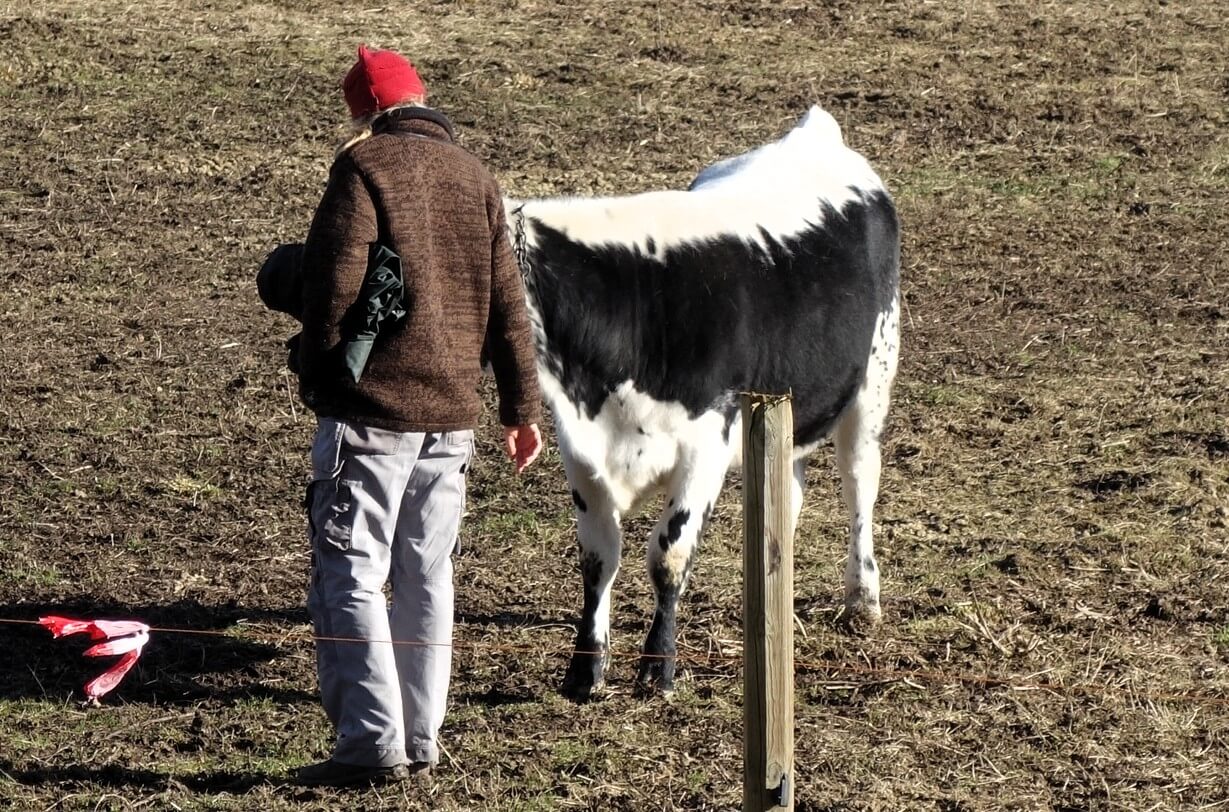
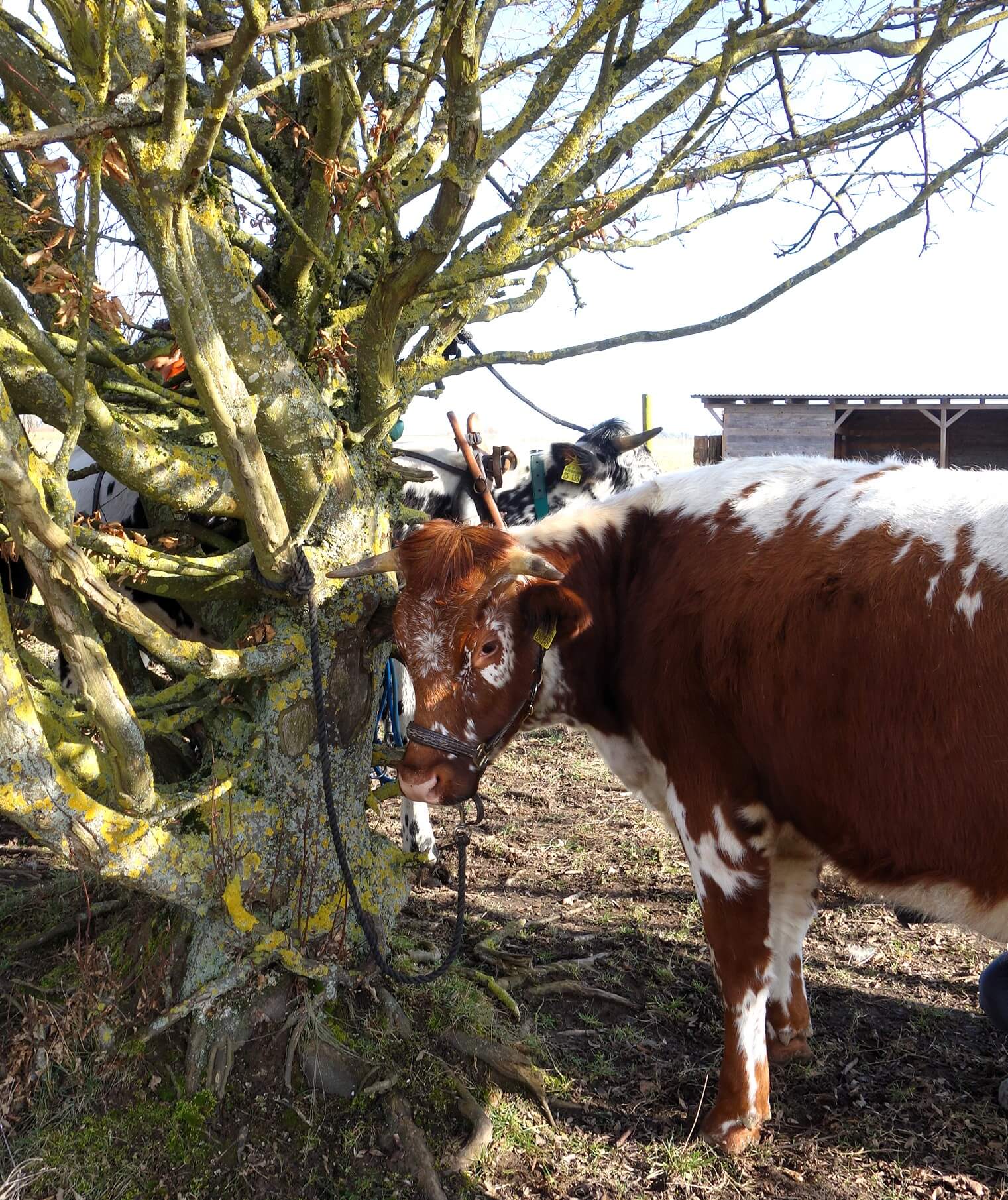
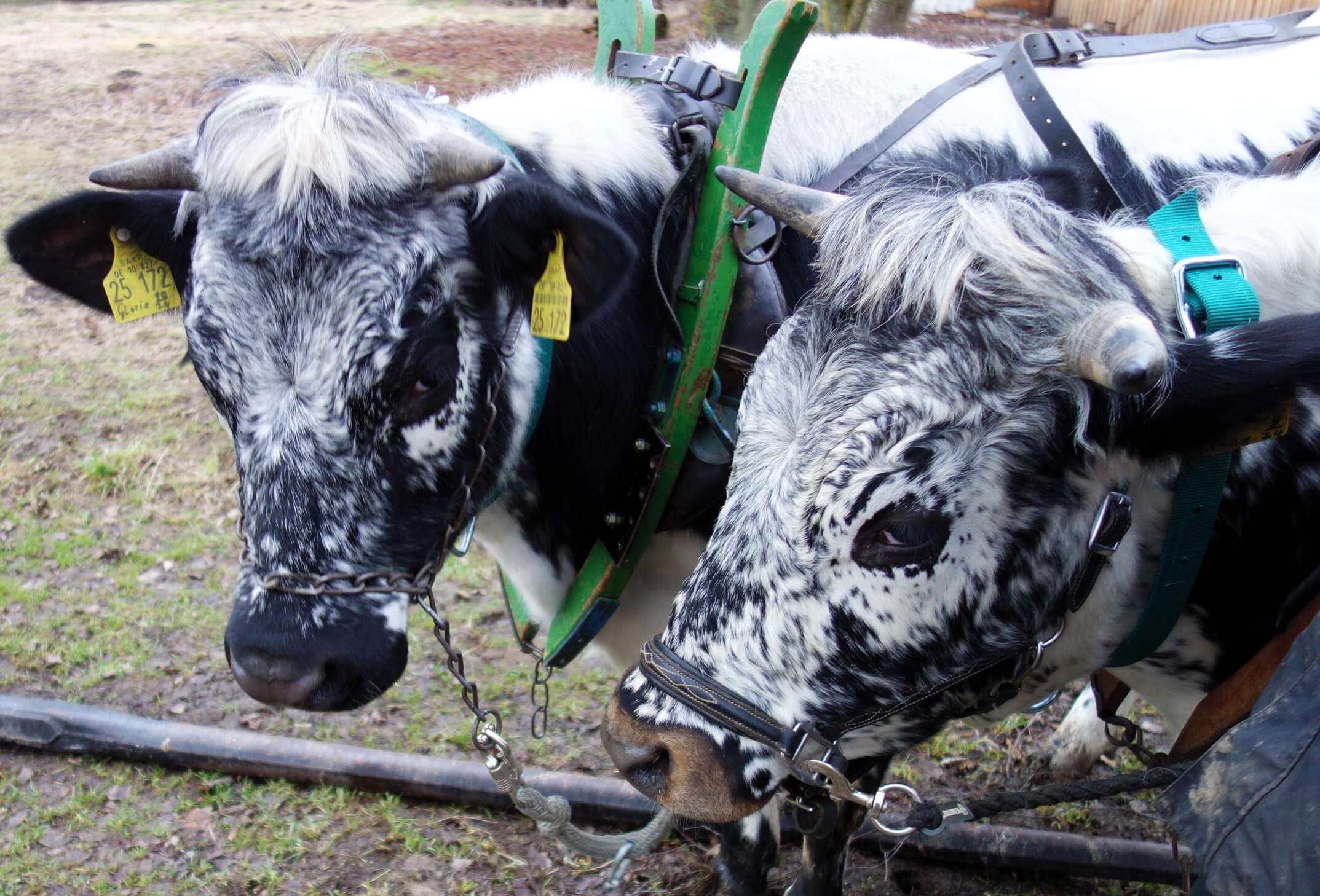
Claus Kropp then showed a series of pictures of his work with his own cattle, the museum animals, and animals he had had for training. These included mainly red list breeds: Allgäu Original Braunvieh, Hinterwälder, Ansbach Triesdorfer, and Rätisches Grauvieh. Incidentally, he also offers courses in draft cattle work in Lauresham (https://kloster-lorsch.de/freilichtlabor/zentrum-fuer-zugrinderforschung-und-ausbildung/).
Anne later reported how she had befriended two single mothers who lived near the Oxenclinic. As a result, she now supports the women: with a lot of her own money and some donations, 8 hectares of land were purchased and a network of single mothers was created there with donated capital, so that the women can initially give each other loans from the donations and later also from each other. This enables them to build a livelihood and support each other. Regular medical care has been organized and further donations have ensured school attendance, including school meals and deworming for the children for the next few months. Other projects under consideration include a well, possibly a reservoir for rainwater for irrigation during the dry season, and long-term security for school fees. Such private land purchases for farmers are particularly important in times of land grabbing (in Uganda mainly by China and India) so that people there can be self-sufficient – a parallel to Germany, where it is also becoming increasingly difficult for farmers and those who want to become farmers to acquire land because land on earth is limited and has increasingly become an object of speculation for non-farmers.